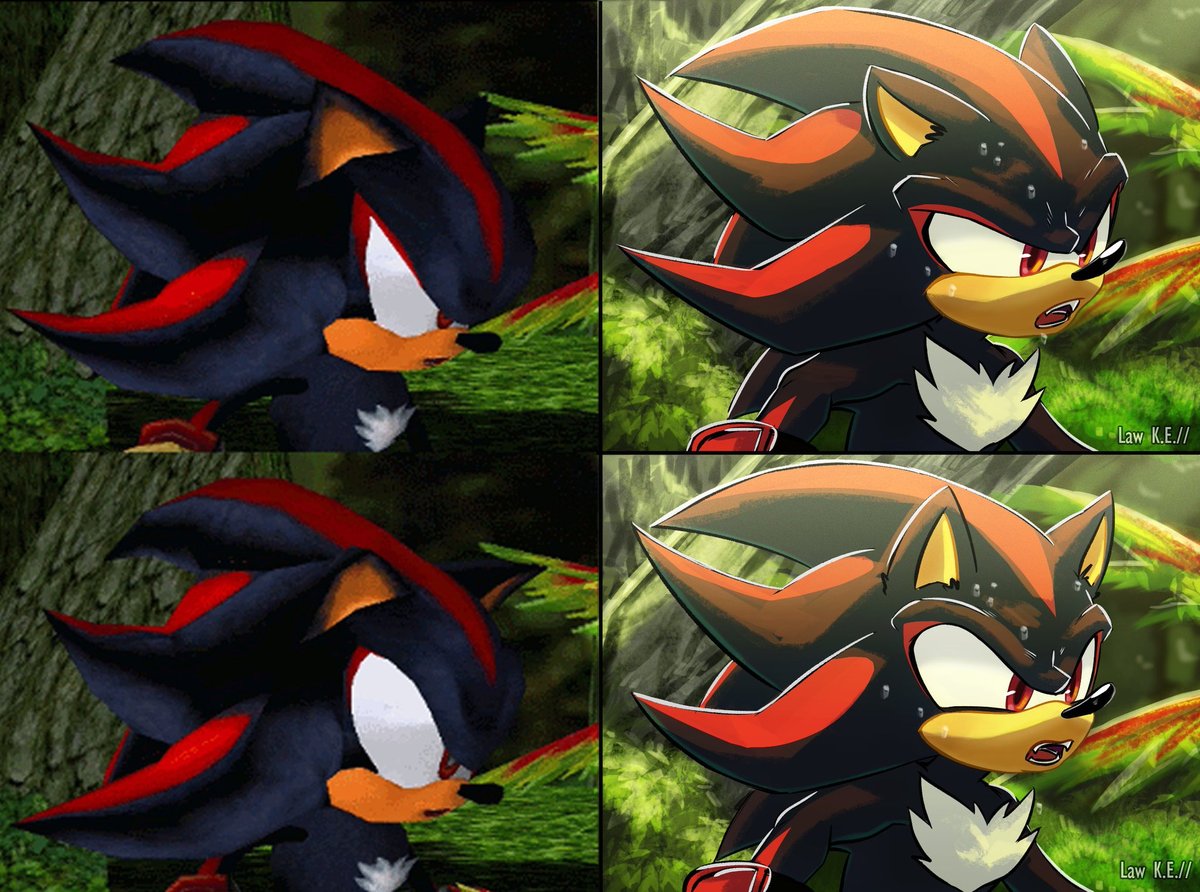
For many fans, the story of Shadow the Hedgehog felt complete—tragic, impactful, and definitive—after Sonic Adventure 2. Yet, the very questions it left simmering beneath the surface provided fertile ground for one of the franchise's most polarizing yet essential narrative bridges: Shadow the Hedgehog (the game). Unpacking these canonical connections reveals a deliberate effort to tie up loose ends and deepen the lore surrounding the Ultimate Life Form, transforming lingering mysteries into foundational truths.
At a Glance: Unraveling Shadow's Canon
- Shadow the Hedgehog is a direct sequel: The 2005 game explicitly picks up after Sonic Adventure 2 and Sonic Heroes, addressing Shadow's amnesia and identity crisis.
- Amnesia as a plot device: Shadow's lack of memory fuels his quest for self-discovery, allowing players to explore his past alongside him.
- The Black Comet's role: The alien invasion led by Black Doom is the catalyst for Shadow's journey, offering him fragmented truths about his origins.
- Branching narrative & choice: Player decisions through Hero, Dark, or Neutral paths influence Shadow's character arc and lead to multiple endings, reflecting his internal conflict.
- Key reveals: The "Omega Ending" definitively explains Shadow's creation from Black Doom's blood and the true, original purpose of the Space Colony ARK's Eclipse Cannon.
- Resolving plot holes: The game ties together the G.U.N. Commander's trauma, Maria Robotnik's dying wish, and Professor Gerald Robotnik's ultimate plan, all stemming from events in Sonic Adventure 2.
The Weight of the Past: Shadow's Legacy in Sonic Adventure 2
Sonic Adventure 2 delivered a high-stakes, emotionally charged narrative that introduced Shadow as Sonic's dark counterpart. His origin as "Project Shadow," his connection to Maria Robotnik, and the tragic events on the Space Colony ARK 50 years prior formed the backbone of the game. Shadow's climactic sacrifice to save the Earth, seemingly perishing in re-entry after using Chaos Control, left players with a powerful, albeit ambiguous, sense of closure.
But for those paying close attention, whispers of uncertainty remained. Was Shadow truly gone? What were the exact details of Project Shadow? Why did Professor Gerald Robotnik turn so vengeful? And what was the true scope of Maria's final wish? These weren't mere plot holes; they were narrative threads deliberately left frayed, ready to be rewoven into a larger tapestry. The G.U.N. Commander, in particular, harbored a deep-seated hatred for Shadow and everything connected to the ARK incident, fueling a personal vendetta that would later become a crucial narrative element.
Bridging the Gap: Sonic Heroes and Shadow's Return
Before diving into his own titular game, Shadow reappeared in Sonic Heroes. His presence here, initially believed to be a robot or clone, confirmed his survival. This outing didn't delve deeply into his backstory, largely focusing on the "Metal Sonic as Neo Metal Sonic" plot. However, it served as a crucial stepping stone, solidifying his place back in the Sonic universe and establishing his amnesiac state. He remembered little beyond his name and a vague sense of his past, setting the perfect stage for a more focused exploration of his identity. He was a survivor, a powerful force, but a puzzle piece without its full picture.
The Genesis of Identity: Kicking Off Shadow the Hedgehog
Fast forward to 2005, and Shadow the Hedgehog launched players headfirst into an alien invasion. Westopolis, a familiar setting from Sonic Adventure 2, became the battleground. Black Doom, the menacing leader of the Black Arms, appeared to Shadow, offering tantalizing snippets of his forgotten past in exchange for the Chaos Emeralds. This wasn't just another villain; Black Doom claimed a profound connection to Shadow, making his amnesia the central conflict and the player's motivation.
From the outset, the game makes it clear: Shadow's quest for self-discovery is the ultimate prize. He's adrift, a powerful weapon without a master or a clear purpose, haunted by fragments of memories involving Maria and Professor Gerald. The stakes are personal, driving Shadow to confront heroes, villains, and even his own potential darkness to piece together who he really is.
A Moral Maze: Gameplay That Shapes Identity
What truly set Shadow the Hedgehog apart, and deepened its canonical significance, was its innovative (and often polarizing) approach to gameplay. Unlike linear Sonic titles, this game offered a radical level of player agency, literally allowing you to shape Shadow's moral compass.
Each of the game's 22 levels presented two or three objectives: assist the "heroes" (Sonic, Tails, Knuckles, etc.), aid the "villains" (Dr. Eggman or Black Doom's aliens), or pursue Shadow's "own interests." This branching path system wasn't just cosmetic; your choices determined which of 326 possible routes you'd take, leading to five core story options and ultimately 10 distinct narrative conclusions.
- The Karma Meter: A visual representation of your choices, this meter tracked "Hero" and "Dark" actions. Filling these gauges unlocked powerful Chaos abilities: Chaos Control (allowing flight or bullet time) and Chaos Blast (a devastating explosive attack), both offering temporary invincibility and infinite ammo. This mechanic wasn't just a power-up; it was a constant reminder of the dual nature within Shadow, the push and pull between good and evil that defined his struggle.
- Weapons and Vehicles: For the first time in a main Sonic game, Shadow wielded an arsenal of weaponry—handguns, SMGs, rifles, RPGs, even gatling cannons. He could also commandeer vehicles. While some found this a departure from Sonic's speed-focused roots, it thematically underscored Shadow's identity as a weapon, a creation designed for combat, further blurring the lines of his morality. These mechanics served to immerse you directly in Shadow's desperate and often violent search for answers.
This intricate system meant that the player's journey wasn't just about reaching the end, but about deciding who Shadow would be. Would he be the hero Maria envisioned? The vengeful tool Gerald created? Or something far more sinister under Black Doom's influence?
The Omega Ending: Unveiling the Absolute Truth
To fully grasp the canonical connections, players had to strive for the "Omega Ending"—the true conclusion unlocked only after experiencing all 10 initial endings. This grand finale pulled back the curtain on decades-old mysteries, solidifying Shadow the Hedgehog's place as a pivotal narrative installment.
The revelations were staggering:
- Shadow's True Origin: It was definitively revealed that Shadow was created not just by Professor Gerald Robotnik, but through a genetic sample of Black Doom's blood. This established a shocking, undeniable link between Shadow and the alien invader, explaining Black Doom's claims and adding a layer of tragic irony to Shadow's existence. He truly was the "Ultimate Life Form," a synthesis of Earth science and alien power.
- The Eclipse Cannon's Original Purpose: The devastating weapon aboard the Space Colony ARK, which Dr. Eggman and Shadow had utilized in Sonic Adventure 2, was never solely designed for global domination or revenge. Professor Gerald Robotnik had originally conceived and built the Eclipse Cannon for one purpose: to destroy the Black Comet, Black Doom's organic mothership, should it ever threaten Earth. This retroactively reframed much of Gerald's initial research and his apparent descent into madness.
- Maria's True Wish and Gerald's Legacy: The Omega Ending clarified that Maria's dying wish wasn't for Shadow to seek vengeance, but for him to bring hope and happiness to humanity. Gerald, driven to despair by Maria's death and the ensuing G.U.N. purge, twisted this wish into a plan for destruction, believing humanity unworthy. However, his ultimate contingency—the Eclipse Cannon against Black Doom—revealed a lingering desire to protect Earth, even in his darkest moments. Shadow finally understands Maria's true intent, giving his existence a noble purpose beyond revenge or destruction.
- The G.U.N. Commander's Resolution: The G.U.N. Commander, who had haunted Shadow with his personal vendetta stemming from the ARK incident (where his family was killed by "Project Shadow"), finally learned the truth. His hatred, born of trauma and misinformation, began to dissipate as the full picture of Gerald's work and Black Doom's manipulation came to light.
These revelations didn't just add new layers; they resolved major plot inconsistencies and character motivations from Sonic Adventure 2, transforming ambiguous historical events into concrete facts. Explore Sonic X Shadows beginnings further into the lore, particularly how these dark origins continue to echo.
Why Shadow the Hedgehog Matters to the Canon
Despite its divisive reputation among fans, Shadow the Hedgehog serves as an indispensable pillar in the franchise's narrative. It takes the enigmatic anti-hero introduced in Sonic Adventure 2 and provides him with a definitive origin, a clarified purpose, and a resolved past. Without it, Shadow's character arc would remain incomplete, his motivations less clear, and several elements of the Sonic Adventure 2 plot would forever hang unresolved.
The game solidifies Shadow as a complex figure who, while born from darkness and conflict, ultimately chooses his own path. It refines his identity from merely Sonic's rival to a hero in his own right, burdened by a tumultuous past but looking toward a future of protecting the world that Maria loved. It also significantly expands the cosmic scope of the Sonic universe, introducing the Black Arms as a powerful, ancient threat.
Common Questions and Misconceptions
The unique nature of Shadow the Hedgehog often leads to questions and misunderstandings.
Is Shadow the Hedgehog game canonical?
Absolutely. The game directly follows the events of Sonic Adventure 2 and Sonic Heroes, picking up on Shadow's amnesia and definitively resolving major plot points established in SA2. Its revelations are consistently referenced in subsequent Sonic media, including the recently released Shadow Generations.
Why isn't Shadow the Hedgehog (the game) on some chronological lists?
Some "chronological lists" of Sonic games often focus on specific subsets, such as the main series titles developed by Sonic Team or classic-era 2D platformers. Spinoffs like Shadow the Hedgehog, Sonic Chronicles, or the Sonic Rush series are sometimes excluded from these specific lists, not because they aren't canonical, but because the list's criteria are narrower. The game's narrative explicitly ties it into the overarching story.
Did Shadow the Hedgehog ruin Shadow's character?
This is a subjective and often debated point among fans. From a purely narrative perspective, the game provides a complete origin story and resolution to his identity crisis. It gives Shadow agency, allowing him to choose his moral alignment. While some fans disliked the darker tone, the inclusion of weapons, or the multiple endings, the game undeniably enriches his backstory and solidifies his place within the canon. It answers lingering questions, giving depth to a character who was initially defined by his past tragedies.
Beyond the Black Comet: What's Next for Shadow?
The narrative journey from Sonic Adventure 2 to Shadow the Hedgehog is a testament to the franchise's willingness to evolve its lore. It transformed a character's apparent demise into a complex saga of self-discovery, ultimately strengthening the foundations of the Sonic universe. By confronting the trauma of the past, Shadow was able to forge an identity on his own terms.
For anyone looking to truly understand the depth of Shadow's character, revisiting these games in sequence offers an unparalleled experience. And with the release of new titles like Shadow Generations, it's clear that the reverberations of his origins continue to shape his future, proving that even the most ambiguous endings can lead to the most definitive beginnings.